Ali Murtaza Jameel had taken his wife and two daughters to Quetta, and late at night he started the drive home to Karachi. Google Maps offered a shortcut. It pulled the car off the national highway and into the Khand area of Dasht, where the road thins out and the lights end. Around three in the morning a group of men came down from the high ground and waved him to stop. He drove on. They put five rounds into him and he died at the wheel, his wife bleeding in the seat beside him, his daughters in the back.
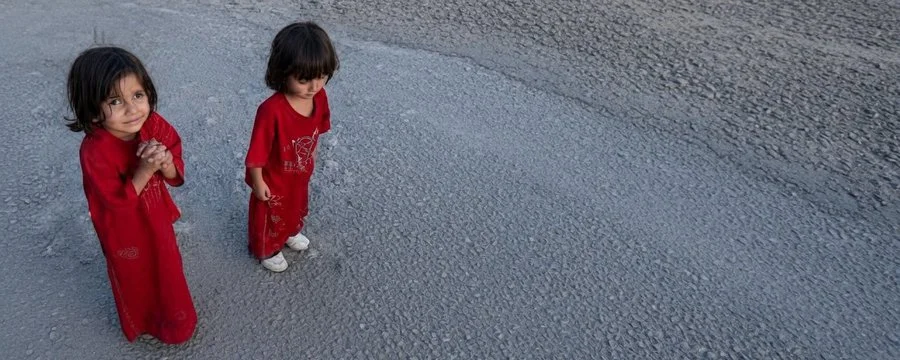
No help came for nearly five hours. The wife, badly hurt, lay in the stopped car as the night ended and told one of her daughters that if she did not make it, the girl was to call her aunt. By six she had started dictating her will. Both girls lived. Their photographs have gone round the country since, taken on the worst morning of their lives. Their father was buried on Sunday in Karachi. It took the Balochistan government only a few days to name the men who had killed him. They were the Balochistan Liberation Army.
Down From the Mountains
The BLA has been killing people like the Jameels for twenty-five years, usually for the same reason, that they came from somewhere else. Its first bomb went off in a Quetta market in July 2000 and killed seven. By 2004 it was running an open insurgency. When the Baloch leader Akbar Bugti died during a military operation in the Bhambore hills in 2006, an operation that killed soldiers too and whose circumstances are still argued over, the movement found its martyr and hardened around him. From 2009 it started picking off Punjabis who had settled in the province, among them teachers and labourers and shopkeepers, and over the years the toll ran into the hundreds.
Then it learned to aim higher. It raised a suicide wing, the Majeed Brigade, and pointed it at the targets most likely to reach the news. In 2018 it hit a bus of Chinese engineers near Dalbandin and sent gunmen into the Chinese consulate in Karachi. The Pearl Continental in Gwadar came in 2019, the Pakistan Stock Exchange in 2020. In 2022 it talked a schoolteacher, a mother of two, into walking up to the Confucius Institute at Karachi University and blowing herself up, which killed three Chinese teachers. The choice of targets was deliberate. China was building its corridor through Balochistan, and the BLA had set out to make every Chinese life in the province expensive.
The last two years were the worst of it. In August 2024 its men stopped buses on the Musakhel highway, went through identity cards, and shot at least twenty-three passengers for being Punjabi. That November they bombed Quetta’s railway station and killed twenty-six. In March 2025 they pulled off something no one in Pakistan had managed before, seizing the Jaffar Express in the Bolan Pass with hundreds aboard and holding it through a daylong siege. A year later a bomber drove into a train near Quetta carrying soldiers and their families, and forty-seven died. Set against all that, the family on the Dasht road barely registers. Which is the point. This is the ordinary, everyday version of what the group does.
Six governments and the European Union have banned the group. Pakistan moved first, in 2006, the United States in 2019 and again, more heavily, in 2025, with Britain, the EU, China and Iran going the same way.
The Hand Behind It
A campaign this size does not run on local anger for twenty-five years. It has to be paid for and armed, and the men need somewhere to vanish between operations. India has been providing all three for a long time.
Its involvement in Balochistan reaches back to the Cold War, when Indian intelligence officers worked the province through the 1970s. One of them, quoted years later in the research of the Indian scholar Avinash Paliwal, said they had given the Baloch everything, money and guns included. It was built two generations ago and no one in Delhi ever shut it down. The geography has not moved either. The insurgency’s commanders live across the borders, in Afghanistan and Iran. Afghan officials have admitted that the police chief of Kandahar housed BLA leaders for years. Aslam Baloch, who built the Majeed Brigade, lived in that city and was killed there in 2018. The Iranian end ran out of Chabahar.
The intent is on the record, and it sits at the top of the Indian state. In a 2014 lecture, Ajit Doval, who became national security adviser a few months later and holds the post still, laid out what he called a doctrine of defensive offence and named where it would fall. You can do one Mumbai, he said, and you may lose Balochistan, adding that Pakistan was far more exposed to this kind of pressure than India was. Two years on, Narendra Modi stood on the ramparts of the Red Fort and raised Balochistan in a public address, the first Indian prime minister to do it. The separatists treated it as a blessing.
Kulbhushan Jadhav gave the doctrine a face. He has been in Pakistani custody since March 2016, caught after crossing from Iran into Balochistan at Mashkel on a genuine Indian passport issued in the invented name of Hussain Mubarak Patel. A real state passport in a false Muslim identity is not something a private citizen arranges for himself. Jadhav told his interrogators he was a serving officer of the Indian Navy, seconded to RAW, working out of Chabahar, paying Baloch militants and running men along the Makran coast. India has never explained the passport or the crossing. The kidnapping it claims, that he was seized from Iranian soil, has never been confirmed by Tehran.
The insurgency’s own leaders barely trouble to hide it. Jumma Khan Marri, who founded the Balochistan Liberation Front, has said outright that India took the cause over and bankrolled it, and that it would fold without Indian money. Hyrbyair Marri directs the BLA from exile and keeps a man in Delhi. Naela Quadri Baloch runs a campaign from Indian soil for a Baloch government in exile. When the BLA took the Jaffar Express, parts of Indian social media cheered, some of it quoting Doval back at the screen and promising a free Balochistan. The hardest account came from neither government. In 2024 the Guardian, working from serving intelligence officials on both sides, reported that India had been carrying out targeted killings inside Pakistan, the exact method Doval had described ten years before.
Kabul, Again
The sponsor has lately changed address. For twenty years India backed the Taliban’s enemies and funded the republic that fought them, then closed its embassy in Kabul when the Taliban walked back into power in 2021. In October 2025 it reversed itself. It received the Taliban foreign minister, Amir Khan Muttaqi, in Delhi, the first visit of its kind since the takeover, and said it would reopen the embassy and accredit the Emirate’s diplomats. Muttaqi called India a close friend, and on Indian soil he endorsed India’s line on Kashmir. Twenty years spent trying to keep the Taliban out, and now India is the first to come knocking.
India has walked back into the one place the war on Pakistan is actually run from. The BLA’s leaders sit in Kandahar. The Pakistani Taliban and its splinters work out of Jalalabad and the country along the eastern border. On the night of 27 June a vehicle bomb blew open the gate of a Rangers camp in Karachi’s Gulistan-e-Jauhar and gunmen followed it in. Three soldiers were killed. Three attackers died and one was taken alive, an Afghan from Jalalabad who told interrogators he had trained in Afghanistan and that the operation had been assembled and supplied from across the border by Jamaat-ul-Ahrar, a faction of the Pakistani Taliban. Pakistan summoned the Afghan chargé d’affaires two days later. The separatist in the western hills and the bomber in the eastern city draw on the same rear, and the rear is open to India again.
By Other Means
Pakistan spent 2025 and the first half of 2026 climbing. It reopened a line to Washington that had been dead for years. When the United States and Iran needed a back channel, Islamabad was sitting in the middle of it, and the European Union’s foreign policy chief flew in to say so. Each of those gains came at India’s expense, and each came after the open fight of May 2025, which did not end the way Delhi had planned.
None of the violence in this piece depends on that fight. It predates May 2025 by years and stands on its own. What May changed was the tempo. A rival it could not beat in the open became one worth wearing down in the shadows, and the attacks have come faster since.
Which brings it back to that car in Dasht, and the two girls in the back seat. The men who stopped them walked down off a hillside. The idea that put them on it was worked out in a lecture hall and shouted from the walls of a fort in another country, by men who will never have to picture what those girls saw. The girls know the name of the group that took their father. They are too small to be told the rest, who wanted him dead this way, who paid for the bullets. There is no hurry. They have the rest of their lives to find out, and the people who did it are not going anywhere.